

Welding Machines From CROSARC
Become an authorised distributor
 Extensive UK stock
 3-year parts & labour warranty
 Spares available nationally
 Local sales and service centres
 Showroom displays
 Point of sale packaging
 UK-based technical support and advice


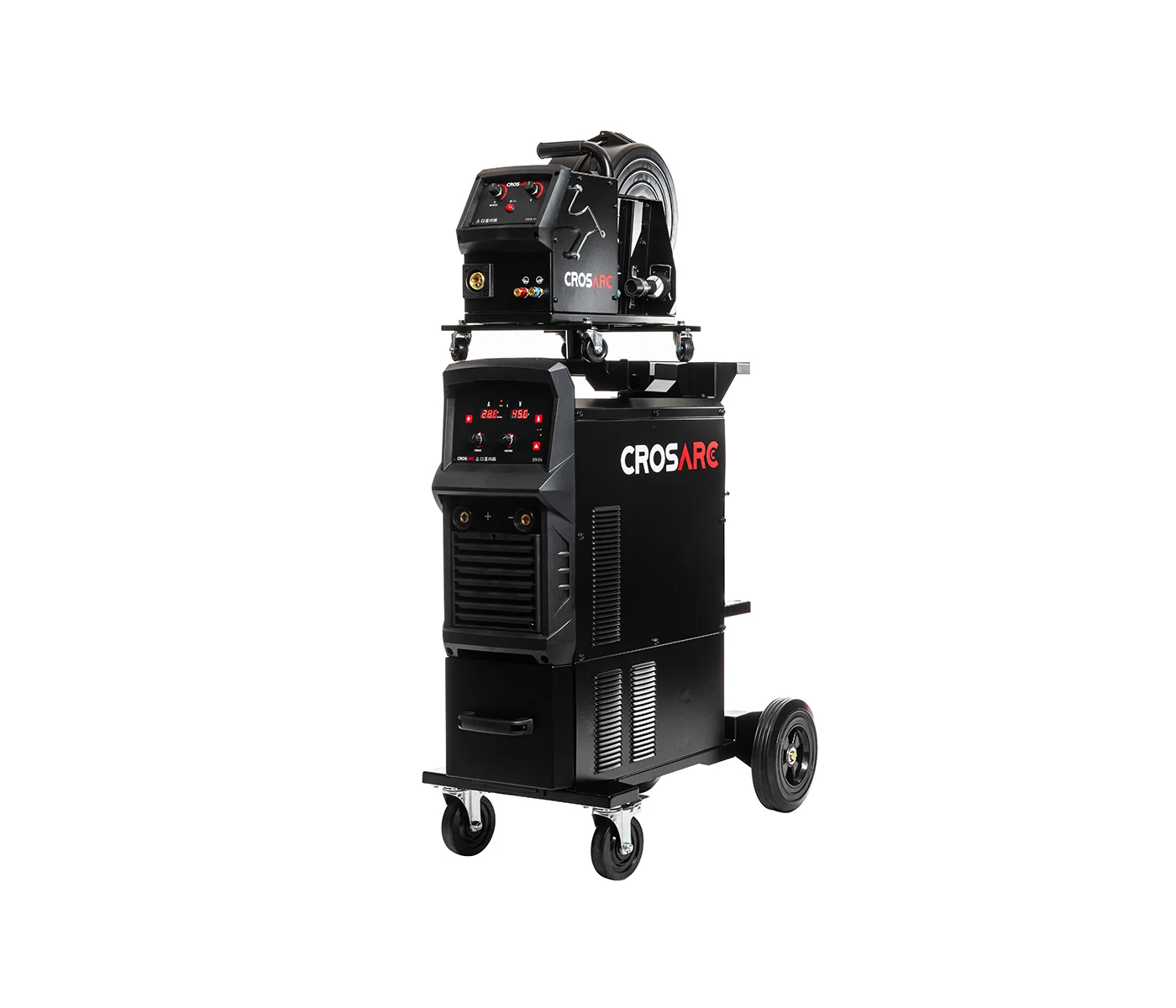
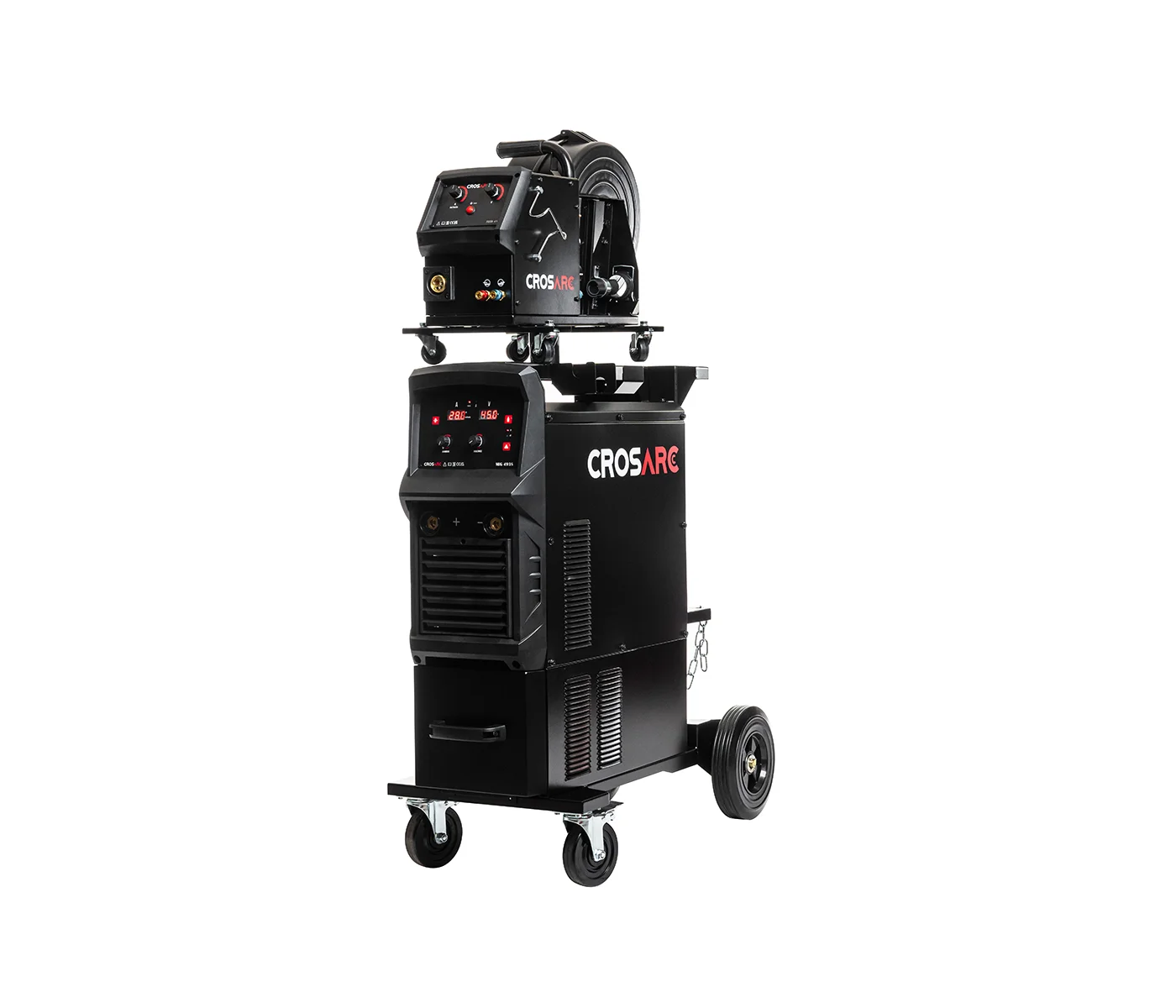


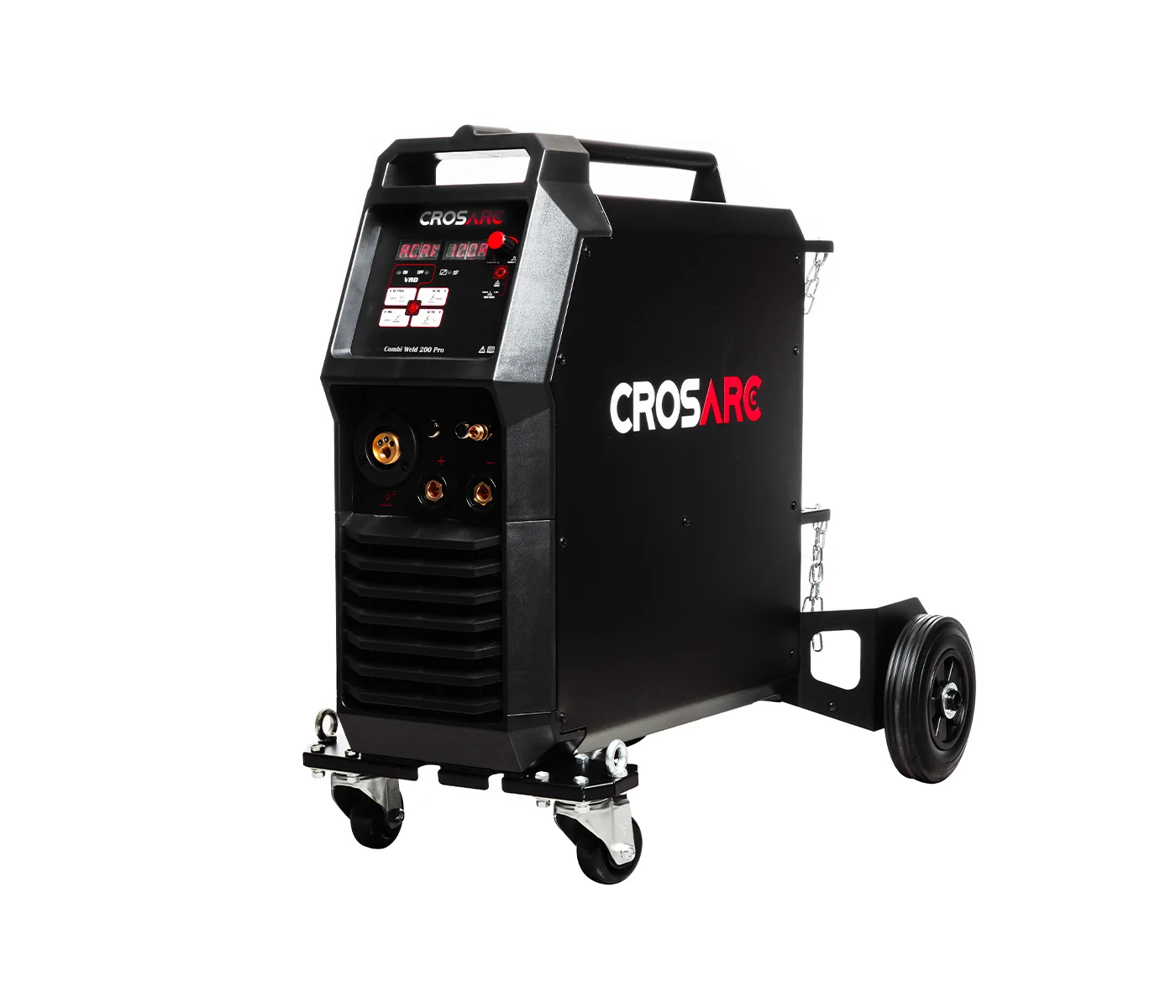
Portable and workshop welding machines
CROSARC’s comprehensive range of welding and cutting machines incorporate technological advantages that are designed to meet the needs of professionals, light industrial users and DIY enthusiasts.
With a choice of portable welding machines and workshop equipment, CROSARC offers powerful, reliable, and versatile welding and cutting solutions for a wide variety of applications and industries.

Explore welders by function or phase
There are a number of choices and options available for welding equipment, depending on the application, environment and skill level. CROSARC, powered by Weldfast UK, offers a full range of welding machines to support all your customers’ requirements.

MMA welders
Manual Metal Arc (MMA) welding (stick or arc welding) is a highly versatile and portable welding process suitable for a wide range of applications, particularly in construction, maintenance, and repair. Its ability of MMA welding machines to perform under various environmental conditions and their cost-effectiveness make arc welding a popular choice across many industries.
- Construction and Structural:
- Building Construction: MMA welding machines are still commonly used to fabricate buildings, bridges, and other structures. The MMA process is suited for operations in various environmental conditions.
- Heavy Equipment and Infrastructure: The MMA process can be used for welding components in heavy machinery, ships, pipelines, and other large-scale industrial applications.
- Maintenance and Repair:
- On-Site Repairs: The portability of MMA welding machines makes them ideal for on-site repairs and maintenance, especially in remote or difficult-to-access locations.
- Agricultural Equipment: The MMA process is suited to a wide variety of agricultural repair and maintenance applications.
- Fabrication:
- Metal Fabrication: Fabrication workshops use the MMA welding process for fabricating metal structures, frames, and custom metal parts. These can range from standard projects to more specialist ones.
- Shipbuilding and Offshore Applications:
- Shipyards: MMA welding machines are generally used in shipyards for constructing and repairing ships under procedural conditions. Their flexibility under adverse conditions make them suitable for marine environments.
- Oil Platforms: Offshore oil platforms choose MMA welding due its ability to perform in wet, windy and difficult environmental conditions.
- Versatility:
- Wide Range of Materials: MMA welders can be used on a variety of metals, including steel, stainless steel, cast iron, and even non-ferrous & dissimilar metals.
- Thickness Range: It is effective for welding a wide range of material thicknesses.
- Portability:
- Compact Equipment: MMA welders are generally portable and can be easily transported to different job sites.
- Minimal Equipment: The setup requires relatively simple and minimal equipment compared to other welding processes.
- Usability in Adverse Conditions:
- Outdoor Welding: MMA welding machines perform well outdoors, even in wet, windy or difficult environmental conditions where other welding processes may not be suitable.
- All Positions: It allows for welding in all positions (flat, vertical, overhead, etc.)
- Cost-Effectiveness:
- Affordable Equipment: MMA welding machines tend to be relatively inexpensive in comparison to other welding processes.
- Quality and Strength:
- Strong Joints: When performed correctly, MMA welding produces strong and durable welds.
- Skill Requirement: Requires a skilled operator to produce high-quality welds.
- Slag Removal: The process generates slag that must be chipped away after welding.
- Welding Fumes: The MMA process produces more welding fumes and compared to some other welding processes. This requires adequate ventilation, extraction and respiratory protective equipment (RPE).
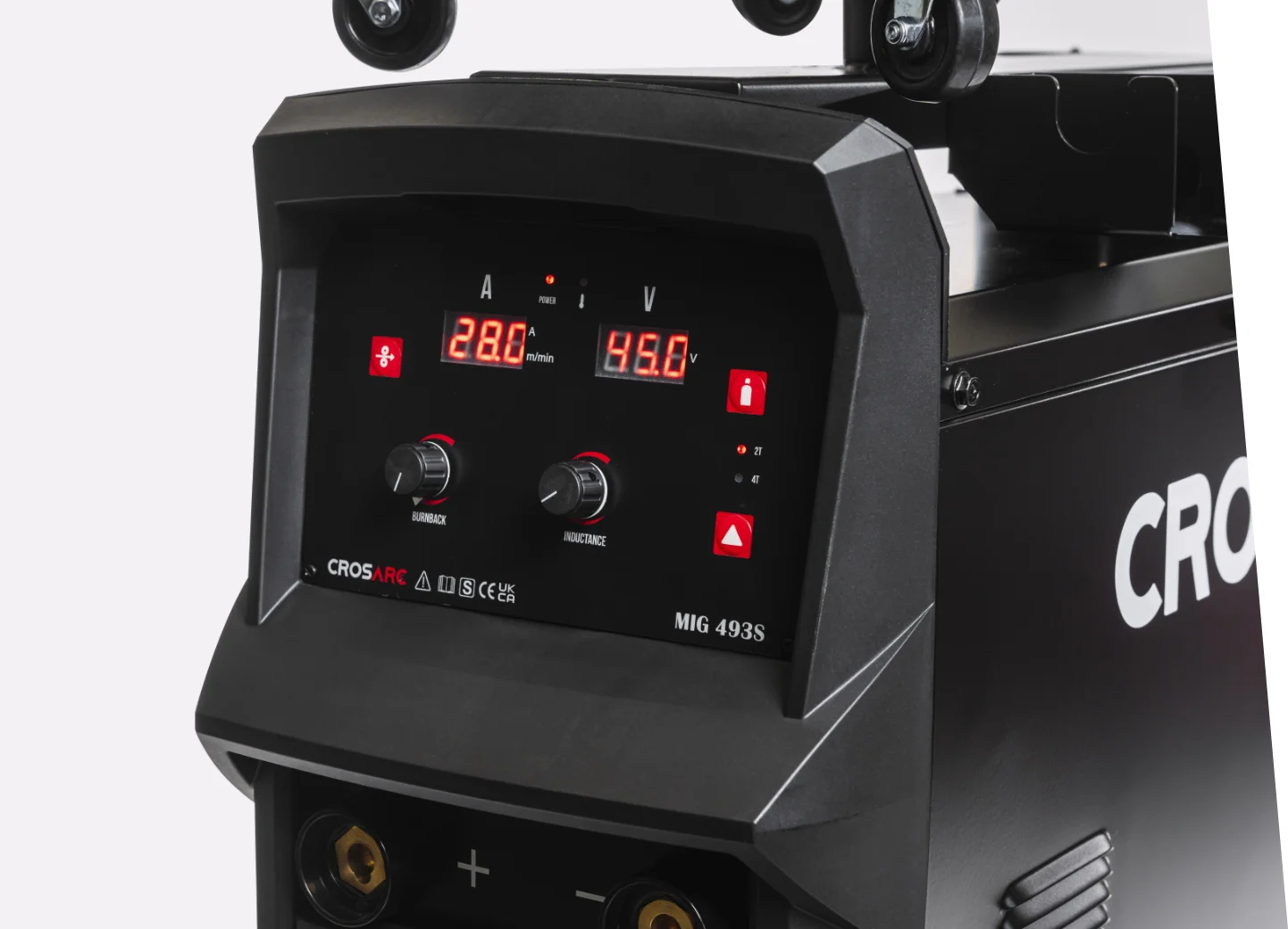
MIG and MAG welders
MIG and MAG Welding (Metal Inert Gas Welding/Metal Active Gas) is a widely used welding process that utilises a continuous fed wire electrode through a welding torch. This wire serves as both the electrode and filler material, when used in conjunction with either an inert gas or active gas protecting the weld pool from contamination. This allows high quality deposits on a wide range of materials.
MIG/MAG welding is a versatile and efficient welding process that is ideal for various applications, particularly in the automotive, manufacturing, and construction industries. Its ease of use, speed, and capability to produce clean and high-quality welds make it a popular choice amongst professionals, light industrial and automotive operators. While it has some limitations, its benefits often outweigh them, making the MIG/MAG welding process the preferred choice for a wide variety of metalworking environments.
- Automotive Industry:
- Automotive and Commercial Vehicle Manufacture and Repair: Accident repair and restoration workshops use MIG/MAG welding machines for repairs, custom modifications, and component fabrication. In addition to MIG/MAG welding, most modern equipment offers the MIG brazing function, commonly used in accident repair workshops.
- Metal Fabrication:
- Sheet Metal Work: Ideal for welding thin materials, MIG/MAG welding is commonly used in fabricating various metal products, including HVAC systems and decorative items.
- Production Lines: Many manufacturing facilities use MIG/MAG welding machines in high-production environments due to their efficiency and ease of use.
- Construction:
- Structural Steel: MIG/MAG welding is widely used for constructing steel structures, such as buildings, bridges, and towers, for both fabrication and assembly.
- Prefabricated Components: It is used to create pre-fabricated components for assembly on-site.
- Shipbuilding:
- Ship Construction: MIG/MAG welding machines are used in shipyards for fabricating and repairing ship hulls and other components due to their speed and versatility.
- DIY and Hobby Projects:
- DIY and Metalworking: The MIG/MAG process is commonly used by hobbyists and DIY enthusiasts. MIG/MAG welders are often used for home and domestic projects, furniture making, and artistic metalwork due to the ease of use.
- Ease of Use:
- User-Friendly: MIG/MAG welding machines are often recommended for beginners due to their straightforward operation and minimal setup time.
- Continuous Feed: The continuous wire feed allows for a stable welding condition making it easier to maintain control over the welding condition.
- Speed and Efficiency:
- High Welding Speed: MIG/MAG welding is one of the fastest welding processes, enabling quick production, reduced labour and material costs.
- Reduced Cleanup: Produces little or no scale compared to other processes, reducing the requirement for any secondary process.
- Versatility:
- Materials: Capable of welding a wide range of materials, including carbon steel, stainless steel, aluminium, and its alloys.
- Thickness Range: Effective on a wide range of material thicknesses and suitable for a variety of applications.
- Quality of Welds:Clean and Smooth Welds: MIG/MAG welding machines produce high-quality, clean welds with minimal spatter, often reducing any secondary process requirement.
- Less Distortion: The low heat input helps reduce distortion of the parent material.
- Gas Supply Required:
- Shielding Gas: Requires a continuous supply of inert or active gas, which can be a limitation in outdoor or windy conditions where the gas can disperse.
- Additional Setup: The MIG/MAG process requires a higher skill set compared to other processes (MMA) due to the machine functionality.
- Sensitivity to Contaminants:
- Surface Preparation: The process requires clean surfaces free from rust, oil, and dirt to produce high-quality welds, which may increase preparation time.

TIG welders
TIG Welding (Tungsten Inert Gas Welding) is a precise and versatile welding process that produces a controlled welding arc between a non-consumable tungsten electrode and the work piece to be welded. The weld area is protected from atmospheric contamination by an inert shielding gas, typically argon or helium.
TIG welding machines are ideal for applications requiring high-quality, clean welds and are used in a wide range of industries. While TIG welding requires a high skill level, it can be slower than other welding processes. Its ability to produce strong, aesthetically pleasing welds makes it the preferred choice for many critical and high-precision applications.
- Aerospace Industry:
- Aircraft Components: TIG welding machines are used extensively for welding aircraft parts due to its precision and ability to produce high-quality welds on thin materials, including titanium and high grade stainless steels.
- Critical Assemblies: Preferred for welding critical components where the highest quality and reliability are required.
- Automotive Industry:
- Exhaust Systems: Used for welding stainless steel and aluminium parts, such as exhaust systems, due to its clean and precise welds.
- Custom Fabrication: Utilised in custom car building and modifications for its control and aesthetics.
- Pipe and Tube Welding:
- Pipe Systems: TIG welding machines are commonly used for pipe welding for the petrochemical, food and pharmaceuticals industries, where high integrity welds are essential.
- Art and Sculpture:
- Metal Art: Artists and sculptors use TIG welding machines for their ability to create detailed and visually appealing welds.
- Jewellery Making: Employed in fine metalwork and jewellery making due to its precision.
- Manufacturing and Fabrication:
- High-Precision Components: Used for manufacturing components that require precise and high-quality welds, such as medical devices and instrumentation.
- Custom Metal Fabrication: Ideal for custom fabrication projects requiring fine control over the welding process.
- Precision and Control:
- Fine Control: TIG welders offer excellent control over the heat input, making it suitable for welding thin materials and intricate components.
- Precision: Allows for precise welds, making it ideal for applications where accuracy is critical.
- Weld Quality:
- High-Quality Welds: Produces high-quality, clean welds with no spatter, reducing the need for post-weld cleanup.
- Aesthetic Welds: Capable of creating visually appealing welds that are often used for exposed joints in architectural applications.
- Versatility:
- Wide Range of Materials: Can weld a variety of metals, including aluminium, stainless steel, magnesium, copper, brass, titanium, and other non-ferrous metals.
- All Positions: Suitable for welding in all positions (flat, vertical, overhead, etc.).
- Clean Process:
- Minimal Contamination: The inert gas shield prevents atmospheric contamination of the weld pool, resulting in aesthetically pleasing and durable welds.
- No Slag: TIG welders produce no slag, which simplifies the welding process and reduces cleanup time.
- Skill Requirement:
- High Skill Level: Requires a high level of skill and dexterity to produce high-quality welds, making it less suitable for beginners and inexperienced operators.
- Steeper Learning Curve: The process is more complex and takes longer to master.
- Speed:
- Slower Process: TIG welders are generally slower than MIG/MAG and MMA welding, which can increase labour costs and time for large projects.
- Equipment Costs:
- Higher Initial Investment: TIG welding equipment can be more expensive due to the need for a high-quality power source, tungsten electrodes, and shielding gas supply.
- Gas Supply Required:
- Dependency on Shielding Gas: Requires a continuous supply of inert gas, making it less practical in windy or outdoor environments where gas can be blown away.
- Preparation and Cleanup:
- Clean Surface Requirement: The materials must be thoroughly cleaned and prepared before welding to ensure high-quality welds, which can increase preparation time.

Multifunction welders
Multifunction welders, also known as multi-process welders, are versatile machines designed to perform multiple types of welding processes, such as MIG/MAG (Metal Inert Gas/Metal Active Gas), TIG (Tungsten Inert Gas), and MMA (Manual Metal Arc) welding. This equipment combines the capabilities of various welding machines into a single unit, making them a valuable tool for welders who need flexibility and efficiency.
Multifunction welders are versatile and cost-effective. They are ideal for small shops, construction sites, automotive and aerospace applications, hobbyists, and custom fabrication. These welding machines are excellent for users who need the flexibility to switch between different welding processes while maintaining a compact and efficient workspace. Multifunction welders are also ideal solutions for colleges and training schools.
- Fabrication Workshops:
- Versatile Tool: Ideal solution for fabrication workshops where space and budget constraints limit the ability to have multiple dedicated welding machines.
- Repair and Maintenance: Used for repairing and maintaining a wide variety of equipment and structures, providing the flexibility to choose the best welding process for each application.
- Construction Sites:
- On-Site Fabrication and Repair: Useful for construction sites where different types of welding tasks may be required, from structural steel welding to pipe fitting and more.
- Portability: Portable multifunction welders are beneficial for on-site work, reducing the need to transport multiple machines.
- Automotive and Aerospace Industries:
- Fabrication and Repair: Employed in the automotive and aerospace industries for fabricating and repairing different components, offering the ability to switch between welding processes as required.
- Prototyping and Custom Work: Useful for prototyping and custom fabrication, allowing for the flexibility to experiment with different welding processes and techniques.
- Semi-professional and DIY Enthusiasts:
- Home Workshops: Popular among hobbyists and DIY enthusiasts for home projects, as they provide a cost-effective way to perform various welding tasks without investing in multiple machines.
- Learning and Training: Great for learning and training purposes, giving beginners the opportunity to practise different welding techniques and processes with one machine.
- Industrial Manufacturing:
- Production Flexibility: Used in industrial manufacturing for small to medium production runs where different welding processes may be needed for various parts and components.
- Custom Fabrication Shops: Beneficial in custom fabrication shops that handle a diverse range of projects requiring different welding methods.
- Versatility:
- Multiple Processes: Capable of performing MIG, TIG, and MMA welding, allowing users to handle a wide range of materials and thicknesses.
- Adaptability: Suitable for various welding tasks, from precision TIG welding on thin materials to heavy-duty MMA welding on thick steel.
- Cost-Effectiveness:
- One Machine, Multiple Functions: Reduces the need to purchase separate machines for each welding process, saving money and space.
- Reduced Equipment Costs: Lower initial investment compared to buying multiple dedicated machines.
- Convenience and Efficiency:
- Space-Saving: Ideal for small workshops and mobile units where space is limited.
- Process Selection: Allows for quick switching between welding processes, improving efficiency and reducing downtime.
- Portability:
- Portable Units: Many multifunction welders are designed to be portable, making them suitable for on-site work and field repairs.
- Ease of Transport: Easier to transport one multifunction machine rather than several dedicated machines.
- User-Friendly:
- Simplified Controls: Often feature intuitive controls and settings, making them accessible for both beginners and experienced welders.
- Learning Tool: Great for those learning different welding techniques, as they provide the ability to practise and master multiple processes.
- Complexity and Learning Curve:
- Learning Curve: Beginners may find the learning curve steeper compared to using dedicated machines due to many processes in one power source.
- Maintenance:
- Repair Costs: Repairs can be more costly and complex due to the integrated nature of the machine.

CD stud welders
Capacitor discharge stud welding is a fast and reliable process used to attach fasteners directly to metal surfaces without the need for holes, nuts or bolts. This method is popular across industries like construction, automotive, shipbuilding, HVAC and manufacturing. While these welding machines require clean surfaces, their speed, strength and versatility make them a cost-effective solution for many applications.
- Construction:
- Steel Construction: Used extensively in the construction of buildings, bridges, and other steel structures to attach shear connectors, insulation pins, and threaded studs.
- Decking and Flooring: Employed for welding studs to steel beams in composite construction, providing strong and reliable attachment points for decking and flooring materials.
- Automotive Industry:
- Body Assembly: Used for attaching various components to car bodies, such as electrical grounding points, trim, brackets, and insulation fasteners.
- Exhaust Systems: Applied in welding mounting studs and heat shields to exhaust systems and other automotive parts.
- Automotive panel repair: Threaded studs are attached to a body panel as a pulling point for dent removal.
- Shipbuilding:
- Hull Construction: Utilised in the construction of ship hulls and other structural components, where it provides strong and durable connections.
- Insulation and Fixtures: Employed for attaching insulation, fixtures and other components inside ships.
- Electrical and Electronics:
- Electrical Panels: Used for welding studs and fasteners in electrical panels and enclosures to provide grounding points and secure mounting for components.
- Appliance Manufacturing:
- Household Appliances: Stud welders are used in the manufacturing of household appliances like ovens, washing machines, and refrigerators to attach various internal components and fixtures.
- Industrial Equipment: Employed in the production of industrial equipment, providing secure and reliable attachment points.
- Insulation and HVAC:
- Insulation Fastening: Used for attaching insulation materials to walls, roofs, and HVAC ducts, ensuring a secure and durable bond.
- HVAC Systems: Employed in the construction and installation of HVAC systems, providing mounting points for components and insulation.
- Speed and Efficiency:
- Quick Process: Stud welding is a fast process, often taking only a few milliseconds to complete, making it highly efficient for high-production environments.
- Minimal Setup: Requires minimal setup time, especially compared to traditional fastening methods that involve drilling and tapping holes.
- Strong and Reliable Fixings:
- High-Strength Bonds: Stud welders create strong and durable fixings, providing reliable and long-lasting connections.
- Consistent Quality: Produces consistent and repeatable results, ensuring uniform quality across all welds.
- Versatility:
- Wide Range of Materials: Can be used on a variety of materials, including steel, stainless steel, aluminium, and other metals, plus anti-corrosion surfaces such as galvanised steel.
- Different Stud Types: Capable of welding different types of studs, such as threaded, unthreaded, and specialty studs.
- Clean and Aesthetic:
- No Need for Holes: Eliminates the need for drilling or punching holes, preserving the integrity and appearance of the base material.
- Minimal Distortion: Generates minimal heat, reducing the risk of warping or distortion of the base material.
- Cost-Effective:
- Reduced Labour Costs: The speed and efficiency of stud welders reduces labour costs, making them cost-effective for large-scale production.
- Material Savings: Eliminates the need for additional fasteners like nuts and bolts, reducing material costs.
- Surface Preparation:
- Clean Surfaces Required: The surfaces to be welded must be clean and free of contaminants like rust, paint, or grease to ensure high-quality welds.
- Preparation Time: Additional time may be needed for surface preparation, especially in environments with heavily contaminated materials.
- Accessibility:
- Limited Access Areas: May be challenging to use in tight or hard-to-reach areas where the welding gun cannot be easily positioned.
- Flat Surfaces Preferred: Works best on flat or slightly curved surfaces, and may not be suitable for highly irregular or complex shapes.
- Stud Diameter: Most CD stud welding equipment is limited to a M10 (10mm) diameter stud.

Water cooled welders
Water cooled welders use a water cooling system to manage heat during high-amperage welding, allowing for longer operation and improved performance. Ideal for demanding applications like heavy fabrication, automotive, aerospace, and shipbuilding, these welding machines offer superior heat management, extended duty cycles, and enhanced operator comfort.
While they have higher upfront costs and require maintenance, the durability and precision of water cooled welders makes them a worthwhile investment for both professional and industrial use.
- Heavy Fabrication and Manufacturing:
- Structural Welding: Used in welding large structural components where prolonged high-amperage welding is required.
- Heavy Machinery: Employed in the manufacturing of heavy machinery and equipment, which often involves welding thick materials.
- Automotive and Aerospace Industries:
- Automotive Assembly: Used in automotive plants for assembling car bodies and frames, where precise and continuous welding is essential.
- Aircraft Components: Essential in the aerospace industry for welding critical components that require high precision and strength.
- Shipbuilding and Offshore Applications:
- Hull Fabrication: Used for welding large sections of ship hulls, which often require continuous high-amperage welding.
- Offshore Structures: Employed in constructing and repairing offshore platforms and rigs, where durability and reliability are crucial.
- Industrial Manufacturing:
- Production Lines: Ideal for high-production environments such as manufacturing plants, where consistent and continuous welding is needed.
- Metal Fabrication: Used in metal fabrication shops for welding a variety of materials and thicknesses.
- Pipe and Tube Welding:
- Pipeline Construction: Used in pipeline welding, where long continuous welds at high amperages are common.
- Process Piping: Employed in welding process piping in industries like petrochemical, food and beverage, and pharmaceuticals.
- Art and Sculpture:
- Metal Art: Used by artists and sculptors who work on large metal pieces, requiring sustained welding without overheating.
- Heat Management:
- Extended Operation: The water cooling system allows for extended periods of welding at high amperages without overheating.
- Consistent Performance: Maintains a stable temperature, ensuring consistent performance and reducing the risk of thermal damage to components.
- Increased Duty Cycle:
- High Duty Cycle: Water-cooled welders have a higher duty cycle compared to air-cooled models, enabling more welding time before the machine needs to cool down.
- Improved Productivity: Increased duty cycle leads to improved productivity, especially in high-production environments.
- Comfort and Safety:
- Reduced Heat: Reduces the heat in the welding gun or torch, improving operator comfort and safety.
- Longer Torch Life: Prolongs the life of the welding torch by preventing overheating and reducing wear.
- Precision and Control:
- Stable Welding Arc: Provides a stable welding arc, crucial for precise and high-quality welds.
- Versatile Applications: Suitable for a wide range of welding processes and materials, including MIG, TIG, and plasma cutting.
- Durability:
- Robust Components: Water-cooled systems are designed to withstand demanding welding conditions, making them durable and reliable.
- Reduced Maintenance: The cooling system reduces the likelihood of overheating and damage, leading to less frequent maintenance.
- Complexity and Cost:
- Higher Initial Investment: Water-cooled welders are generally more expensive than air-cooled models due to the added complexity of the cooling system.
- Maintenance: The water cooling system requires regular maintenance to ensure optimal performance, including checking for leaks and maintaining coolant levels.
- Portability:
- Less Portable: Water-cooled systems are typically bulkier and less portable than air-cooled models, making them less suitable for fieldwork or applications requiring frequent movement.
- Setup Requirements: Requires additional setup for the cooling system, including a water source and coolant circulation.
- Potential for Leaks:
- Leak Risk: The cooling system can develop leaks, which may lead to downtime and require repairs.
- Water Quality: Requires clean, deionised water to prevent corrosion and scaling inside the cooling system.
- Environmental Considerations:
- Coolant Disposal: Proper disposal of used coolant is necessary to prevent environmental contamination.
- Energy Consumption: The cooling system may increase overall energy consumption.

Single Phase Welders
Single phase welders are versatile welding machines that operate from 110v (where applicable)/230v 50hz single-phase electrical power supply, making them suitable for residential, DIY, light commercial and site applications.
These welding machines are portable, cost-effective, and user-friendly. They are ideal for light to medium-duty tasks. They are commonly used in small workshops, automotive repair, agricultural maintenance, and education.
Single phase welders are suitable for all processes such as MMA, MIG, TIG welding and plasma cutting. Their convenience and accessibility make them a popular choice for a wide range of users.
- Residential and DIY Projects:
- Home Repairs: Used for general home repair and maintenance tasks, such as fixing gates, fences, and other metal structures.
- Hobby Welding: Popular among hobbyists for creating metal art, sculptures, automotive restoration and other DIY projects.
- Light Commercial Work:
- Small Workshops: Ideal for small workshops that handle light fabrication and repair work, where three-phase power might not be available.
- Maintenance and Repairs: Used by maintenance teams for repairing equipment and machinery in small commercial facilities.
- Automotive Industry:
- Body Shops: Employed in automotive body shops for welding panels, exhaust systems, and other components.
- Custom Fabrication: Used for custom car building and modifications, offering the flexibility needed for various tasks.
- Agricultural Maintenance:
- Farm Repairs: Used for maintaining and repairing farm equipment, gates, and other metal structures.
- Site Applications: Portable single-phase welders are useful for on-site repairs in the field.
- Educational and Training:
- Welding Schools: Used in welding schools and training facilities to teach students the basics of the various welding processes.
- Technical Training: Employed in technical training schools to provide hands-on experience with a variety of welding processes.
- Light Industrial Manufacturing:
- Fabrication of Small Parts: Used in light industrial manufacturing settings for fabricating small parts and components.
- Prototyping: Useful for prototyping and small production runs where large-scale equipment is not necessary.
- Accessibility:
- Common Power Supply: Operates on a 110v or 230v single-phase power supply, making them accessible for most residential, light commercial and site applications. Typically easy to set up and use, requiring only a standard electrical outlet.
- Portability:
- Lightweight and Compact: Often designed to be lightweight and compact, making them easy to transport and ideal for mobile work.
- Portable Units: Suitable for workshop and on-site applications and repairs due to their portability.
- Cost-Effectiveness:
- Lower Cost: Generally less expensive than three-phase welders, making them a cost-effective option for small-scale operations and light metalwork enthusiasts.
- Versatility:
- Multiple Processes: Available in models that support various welding processes, including MMA, MIG, and TIG.
- Wide Range of Applications: Suitable for a variety of welding tasks, from home repairs to light industrial work.
- User-Friendly:
- Ease of Use: Often feature user-friendly controls and settings, making them accessible for beginners and experienced welders alike.
- Learning Tool: Good for learning and practicing welding techniques due to their simplicity and versatility.
- Power Limitations:
- Duty Cycle: Typically, single phase power sources have a lower duty cycle in comparison to their three phase industrial equivalents.
- Material Thickness:
- Thin to Medium Materials: Best suited for welding thin to medium-thickness.
- Limited Penetration: May not provide the penetration needed for heavy-duty welding tasks.
- Industrial Applications:
- Not Ideal for Heavy Industry: Not suitable for heavy industrial applications where high power and extended duty cycles are necessary.
- Equipment Longevity: May have a shorter lifespan under heavy use conditions compared to more robust three-phase machines.

Three Phase Welders
Three phase welders are robust machines that operate on three phase electrical power, commonly found in industrial and commercial settings. Designed for heavy-duty tasks, they deliver high power output, stable arcs, and extended duty cycles. This makes them ideal for industries like shipbuilding, aerospace, automotive, and large-scale infrastructure projects. While they require higher power and involve greater upfront costs, their efficiency, reliability, and performance make them essential for demanding industrial applications.
- Industrial Fabrication:
- Structural Steel: Used extensively in fabricating and erecting structural steel components for buildings, bridges, and other large structures.
- Industrial Equipment Manufacturing: Essential in the manufacturing of heavy machinery, construction equipment, and industrial equipment.
- Shipbuilding and Marine Applications:
- Ship Building: Used for welding large and thick plates in shipbuilding and marine projects.
- Offshore Platforms: Used in the construction and maintenance of offshore oil and gas platforms.
- Automotive and Aerospace Industries:
- Vehicle Assembly: Used in the production and assembly of vehicles.
- Aircraft Manufacturing: Commonly used for welding aircraft components and in aircraft construction.
- Pipeline Industry:
- Pipeline Construction: Used in welding pipelines for oil, gas, and water distribution.
- Process Piping: Used in industries such as chemical processing, pharmaceuticals, and food and beverage for welding process pipelines.
- Manufacturing and Production Lines:
- High Production: Ideal for high-production environments where consistent and continuous welding is required.
- Metal Fabrication: Used in the fabrication of a wide range of metal products and components.
- Railroad and Infrastructure:
- Railway Industry: Used in the construction and maintenance of railway tracks and infrastructure.
- Public Infrastructure: Used in welding components for public infrastructure projects such as bridges, tunnels and structural buildings.
- Power and Performance:
- Higher Amperage: Capable of delivering higher amperage, making them suitable for welding thicker materials and heavy-duty applications.
- Consistent Arc Stability: Provides a more stable welding arc, essential for high-quality welds.
- Duty Cycle:
- Extended Operation: Designed for continuous operation with a higher duty cycle, allowing for longer periods of welding.
- Efficiency: More efficient power usage, reducing downtime and increasing productivity in industrial settings.
- Versatility:
- Multiple Welding Processes: Many three-phase welders support various welding processes, including MIG, TIG, MMA, and Flux-Cored Arc Welding (FCAW).
- Wide Range of Applications: Suitable for a broad spectrum of welding tasks, from heavy industrial fabrication to precision welding in aerospace.
- Durable and Reliable:
- Robust Construction: Built to operate in the most demanding of industrial environments, offering durability and long service life.
- Consistent Quality: Delivers consistent weld quality even in demanding conditions.
- Efficiency:
- Lower Operating Costs: More energy-efficient for large-scale operations, potentially reducing operating costs.
- Reduced Voltage Drops: Less susceptible to voltage drops, providing stable power delivery and consistent performance.
- Power Requirements:
- Three-Phase Power Supply: Not commonly available in rural and residential settings. Special installation may be required.
- Cost:
- Initial Investment: Generally more expensive than single-phase welders, with higher initial costs for both the machine and the installation of a suitable power supply.
- Maintenance: May have higher maintenance costs, depending on the working environment.
- Portability:
- Less Portable: Typically three phase power sources can be larger and heavier than single phase welders, making them less suitable for portable applications.
- Site Use: Not as convenient for fieldwork or on-site repairs where three phase power is unavailable.
- Operation:
- Advanced Operation: May require more advanced knowledge and skill to operate effectively, potentially additional training for operators may be required.
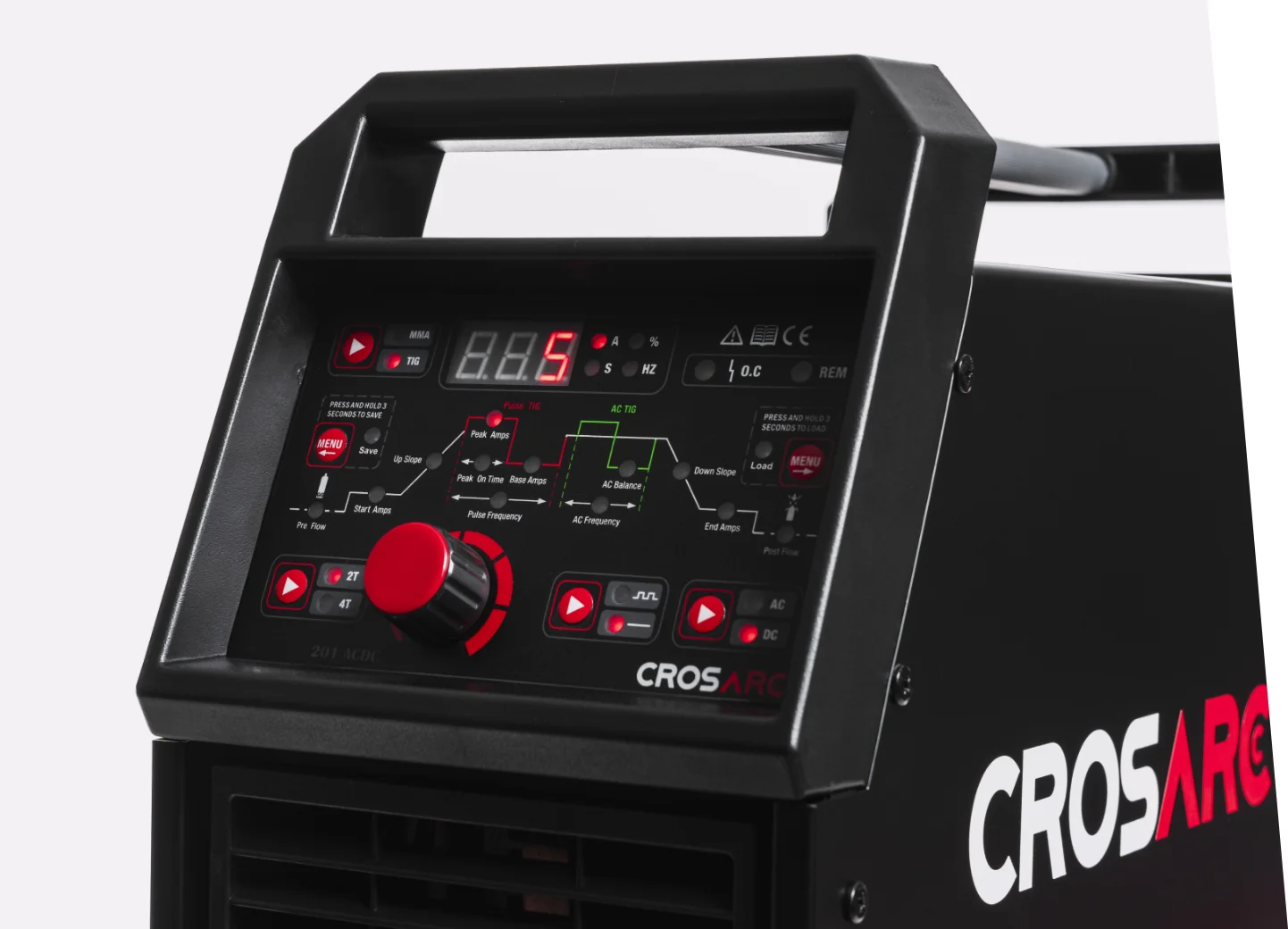
AC/DC TIG Welders
AC/DC TIG welders are versatile welding machines that can switch between alternating current (AC) and direct current (DC). This dual functionality makes them highly adaptable, suitable for a wide range of welding applications and materials. AC/DC TIG welders combine the strengths of both AC and DC welding, providing the flexibility to handle different welding processes and situations efficiently.
AC/DC welders come with higher initial costs and complexity compared to other welding processes. Their versatility, high-quality welds, and adaptability make them a valuable investment for professional and industrial welding operations. Their ability to handle diverse materials and welding applications ensures they can meet the demands of modern industrial tasks.
- Aluminium Welding:
- TIG Welding Aluminium: Use AC output for TIG welding aluminium and its alloys, as the alternating current helps remove the oxide layer for cleaner welds.
- Steel and Ferrous Metals:
- TIG Welding Steel: Use DC output for welding steel and other ferrous metals such as stainless steel, copper and titanium. This provides better control and stability.
- Selected Industrial Fabrication:
- Suitable for welding a wide variety of material types & thicknesses and such as pipeline fabrication and specialist installations using either AC or DC output as Required.
- Automotive and Aerospace:
- Precision Welding: Use DC for high-precision tasks on titanium, stainless steels and all non ferrous materials in the automotive and aerospace industries.
- Aluminum Parts: Use AC for welding aluminium components in vehicles and aircraft.
- Shipbuilding and Marine Applications:
- Pipeline fabrication: Use AC for welding aluminium and DC for steel and stainless steel materials.
- Pipeline and Process Piping:
- Versatile Welding: Use DC for pipeline construction and process piping, providing a stable arc and controlled penetration.
- Educational and Training:
- Comprehensive Training: Ideal for welding schools and training programs to teach students both AC and DC welding techniques.
- Versatility:
- Multi-Process Capability: AC/DC welders support various welding processes, including TIG and MMA welding.
- Wide Range of Applications: Suitable for a broad spectrum of welding tasks, from aluminium to steel and other metals.
- Switchable Current:
- AC/DC Switching: Allows for easy switching between AC and DC, enabling the welder to adapt to different materials and requirements.
- High-Quality Welds:
- Stable Arc and Penetration: Excellent results achieved in both AC and DC welding applications.
- Precision Control: Offers precise control over welding parameters, essential for high-quality welds.
- Flexibility in Welding Positions:
- Positional Welding: Suitable for all welding positions and tasks in both AC and DC processes.
- Cost:
- Initial Investment: AC/DC welders are generally more expensive than single-function DC TIG welders, requiring a higher initial investment.
- Operation:
- Advanced Operation: May require more advanced knowledge and skill to operate effectively, potentially necessitating additional operator training.
- Setup and Maintenance: Generally, AC/DC TIG welders have a more elaborate setup and operation compared to DC only TIG systems.
- Portability:
- Less Portable: Generally AC/DC welders are typically larger and heavier than their DC only versions, so are less suitable for portable applications.

AC Welders
AC welders use alternating current, where the electrical current changes direction periodically. They are often used in specific applications where AC’s characteristics are beneficial. While less versatile than DC or AC/DC welders, AC welders have distinct advantages that make them suitable for certain welding tasks, especially those involving aluminium and thick materials.
AC welders are specialised welding machines that offer distinct advantages for specific applications, particularly TIG welding aluminium and welding thick materials. They are cost-effective, durable, and simple to maintain, making them suitable for small workshops, hobbyists, and general repair tasks. AC welders are also more tolerant of power fluctuations, making them ideal for outdoor and on-site welding.
However, AC welders have less arc stability, heat control, and versatility compared to DC or AC/DC welders. Their primary strength lies in their ability to clean oxide layers from aluminium surfaces and handle robust welding tasks. While less versatile, AC welders are invaluable in specific applications where their unique capabilities shine.
- Aluminium Welding:
- AC TIG Welding Aluminium: AC welders are widely used for TIG welding aluminium. The alternating current helps remove the oxide layer on the aluminium surface, resulting in cleaner and more stable welds.
- Heavy Plate Welding:
- Thick Materials: AC welders are effective for welding thick materials, where high heat input is required to achieve deep penetration.
- Shipbuilding and Marine Repair:
- Hull Repair: Used in shipyards for repairing ship hulls and other components made of aluminium and non-ferrous metals.
- Outdoor and Field Welding:
- Portable Welding: AC welders are robust and less sensitive to power fluctuations, making them suitable for outdoor and field welding where the power supply may be unstable.
- Farm and Heavy Equipment Repair:
- Agricultural Equipment: Employed in repairing farm equipment and heavy machinery that require robust welds.
- Maintenance and Fabrication:
- General Repairs: Used in various maintenance and fabrication tasks where welding thick materials or aluminium is involved.
- Cost-Effective:
- Lower Cost: Generally less expensive than DC and AC/DC welders, making them accessible for small workshops, hobbyists, and DIY enthusiasts.
- Durability and Simplicity:
- Robust Design: Typically more robust and durable, requiring less maintenance and offering longer service life in harsh conditions.
- Simplicity: Easier to maintain and operate due to their simpler design.
- Oxide Layer Removal:
- Oxide Cleaning: The alternating current helps break up and remove oxides from the surface of metals, particularly aluminium, improving weld quality.
- Electrode Versatility:
- Specialised Electrodes: Works well with certain types of electrodes, such as the E6011, which are used for welding dirty, rusty, or painted metals.
- Power Supply Tolerance:
- Stable Performance: More tolerant of power supply fluctuations, making them reliable in environments with unstable power.
- Less Stable Arc:
- Arc Stability: AC welders generally have a less stable arc compared to DC welders, which can impact the precision and appearance of the weld.
- Limited Control:
- Heat Control: Provides less control over the heat input and welding parameters, which can be a disadvantage for precision welding tasks.
- Welding Position Challenges:
- Positional Welding: More challenging to use for out-of-position welding (vertical, overhead) due to the less stable arc.
- Limited Versatility:
- Material Compatibility: AC welders aren’t as versatile as DC or AC/DC welders. They are mainly suitable for welding aluminium and thick materials.
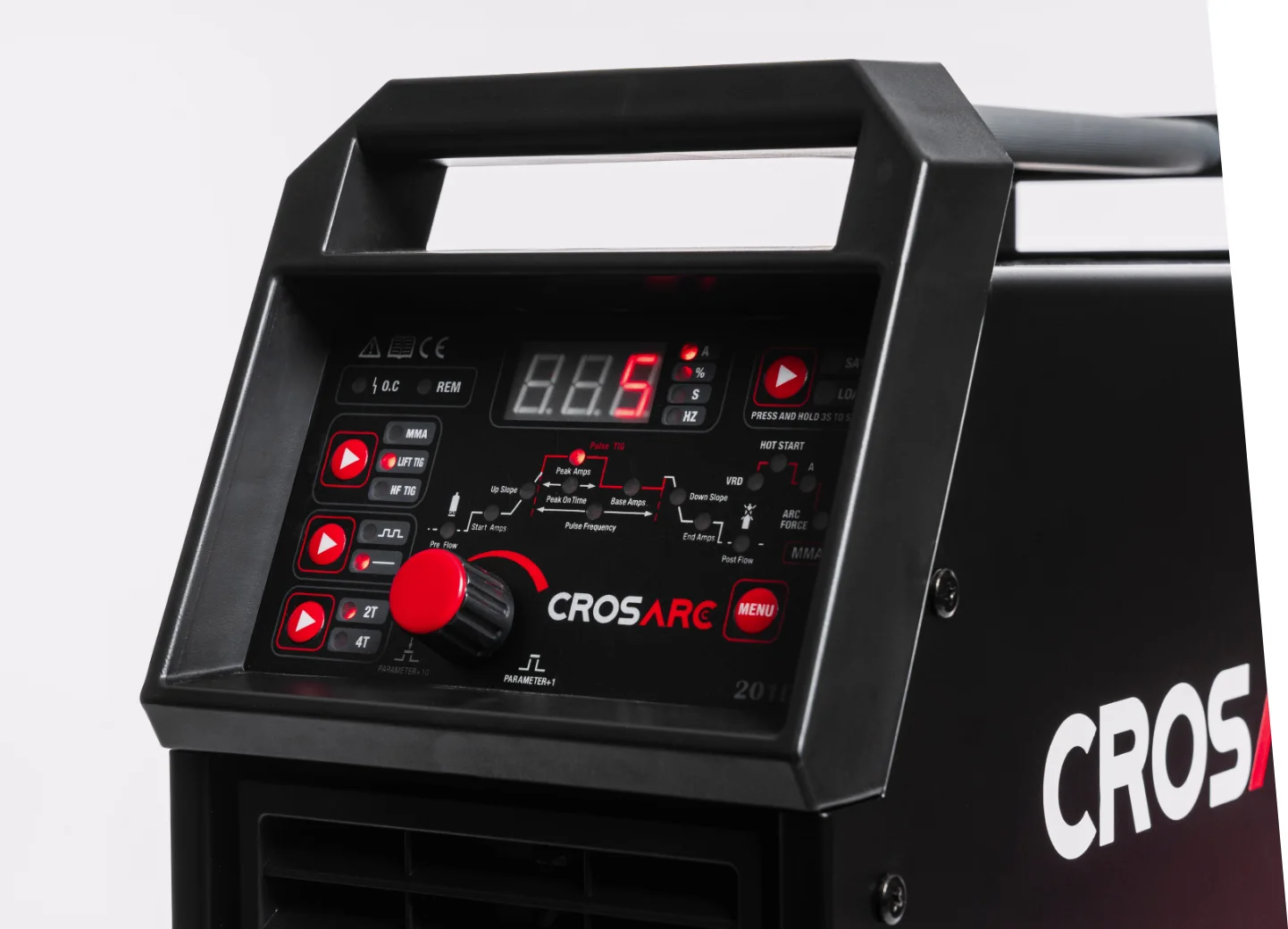
DC TIG Welders
DC TIG welders use direct current, where the electrical current flows in one constant direction. This type of welder is highly versatile and offers a stable arc, making it suitable for a wide range of welding applications and materials. DC welders are known for their precision and control, which are essential for high-quality welds.
DC welders are versatile and precise welding machines that are ideal for a wide range of applications, including steel, stainless steel, titanium and other ferrous materials.
These welding machines offer excellent results in a variety of industries such as food, pipe and tube welding, automotive and aerospace manufacturing, maintenance and repair, and metal fabrication.
DC TIG welders come with variable initial costs. However, their advantages in performance, weld quality, and versatility make them a valuable investment for professional and industrial welding applications. Their ability to handle diverse materials ensures they can meet the challenging demands of various welding tasks efficiently and effectively.
- Steel and Ferrous Metals:
- TIG Welding Steel: DC TIG welders are widely used for welding steel and other ferrous metals.
- Precision DC TIG Welding:
- TIG Welding: The DC TIG welding process offers high quality and precise control over all welding parameters. It delivers exceptional results in a wide variety of industries, such as in aerospace, petrochemical, pharmaceutical and automotive applications.
- Thin Materials: Suitable for welding thin materials where precise control over the arc and heat is crucial.
- Pipe and Tube Welding:
- Pipeline Construction: DC TIG welders are commonly used in pipeline construction and process pipework due to their stable arc and adjustable process parameters.
- Process Pipework: Employed in industries like chemical processing, pharmaceuticals, and food and beverage industries.
- Automotive and Aerospace:
- Vehicle Assembly: Used in the production and assembly of vehicles, where high power and precision are required.
- Aircraft Manufacturing: Essential for welding critical aircraft components that demand high strength and precision.
- Maintenance and Repair:
- Equipment Repair: Used for maintaining and repairing industrial equipment, machinery, and tools.
- General Repairs: Suitable for a variety of ferrous metal applications.
- Light to Heavy Fabrication:
- Metal Fabrication: Utilised in the fabrication of a wide range of metal products and components, from light to heavy-duty applications.
- Stable Arc:
- Arc Control: DC TIG welders provide a stable arc, resulting in exceptional weld quality, especially for critical and high-precision applications.
- Penetration:
- Penetration: Offers adjustable penetration, making it suitable for welding thicker materials and achieving exceptional welded joints.
- Positional Welding:
- Versatility: Easier to use for all positional welding applications, including vertical and overhead.
- Precision: Allows for precise control over the welding parameters, essential for detailed work.
- Electrode Compatibility:
- Electrode Selection: Tungsten electrode selection, compatible for a wide range of materials, thicknesses and applications.
- Heat Control:
- Precise Control: Allows for greater control over the heat input, reducing the risk of distortion and burning through on thin materials.
- Consistent Quality: Precise parameter adjustment ensures consistent weld quality across different materials and thicknesses.
- Skills & Knowledge
- Skill: High level of skill and dexterity required in comparison to MIG & MMA welding processes.
- Welding Knowledge: High understanding of the variable welding parameters is required.
- Material types
- Aluminium: Under normal conditions DC TIG welders are not suitable for welding aluminium and its alloys.
- Cleanliness: Filler and parent material must be free from contamination such as oil, grease and scale to ensure the integrity of the weld.
- Environment
- Conditions: DC TIG welders need to be used in a controlled environment, free from outside atmospheric conditions. This is critical to prevent the flow of shielding gas being disrupted and to achieve contamination-free welds.
- Higher Costs:
- Cost: Generally more expensive than most other welding machines.
- Initial Investment: Higher initial investment for the welding machine, and potentially for compatible accessories and electrodes.
- Power Supply Requirements:
- Stable Power: DC TIG welders require a more stable and reliable power supply, which may not be available in all settings.
- Infrastructure: May need additional infrastructure or modifications to existing power supplies.
- Maintenance:
- Complexity: More complex and may require more maintenance compared to AC welders.
- Training: Operators may need more advanced training to fully utilise the capabilities of DC TIG welders.
- Portability:
- Less Portable: Typically larger and heavier than AC welders, making them less suitable for fieldwork or mobile applications.
- Field Use: Not as convenient for fieldwork where a stable DC power source may not be readily available.